Kirk Byron-Jones’ book Fulfilled is worth a read from the first sentence on. There’s something about his lavish joy in language that entrances the heart. I’ve loved his preaching, and still think he was one of the best keynote speakers I’ve ever heard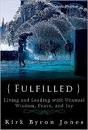 at our annual Synod Assembly some years ago, here in New England. Fulfilled brings back the sound of his voice, and his rich wisdom. I love reading his works on ministry and preaching because he names the hollow places, the times of emptiness and discouragement, the fragility of relationships, the strain of work that continually surprises and makes demands. Even though one consents to all the pushes and pulls of ministry, nevertheless, one gets worn out. Byron-Jones names this fatigue and seeks to minister to it. I have yet to read a book of his without coming away feeling strengthened and encouraged for the work I do.
Fulfilled begins with three scripture passages that speak of God’s promise to pour out water on those of us who are thirsty, water that becomes in us a well of life: Isaiah 12:3; Isaiah 44:3; and John 4:14. He writes “Though water is present in all three scriptures, it is the lavish nature of the water that captures my heart.” Lavish. Like him. Then, he goes on to say something that I want to claim for myself, too: “I no longer can tolerate the disconnect between the over-flowing spiritual sustenance named in these texts and the sense of barely making it in ministry.” It’s a good sentence to claim when dry times come upon us. In Fulfilled, Byron-Jones imagines there are other ways of “living and leading from spiritual and emotional abundance as opposed to scarcity, to live and lead on “Full” as a way of life, as opposed to “Empty” as a way of life.” If I were in his congregation, and heard that sentence, I would say, “amen.” Here’s the link. It’s worth it. http://www.amazon.com/Fulfilled-Living-Leading-Unusual-Wisdom/dp/142675793X

 The Plum Tree
You must be logged in to post a comment.