Monthly Archives: October 2015

Friends on the Road

Two of my friends are making a pilgrimage in Italy for the next few weeks. They are walking a portion of the Via Francigena from Sienna to Rome.  This morning, one of them posted a message that their bank card had been swallowed by a bank machine. This will disrupt their carefully planned journey, as the bank in the town where they are staying is closed today. They will be safe, though, staying at a local hostel.  I loved coming across the signs for the Via Francigena route in Tuscany, a small figure of a pilgrim and a rucksack and staff, with an arrow marking the next direction or turn. My friends been sending photographs of the journey, of rolling hills, plowed fields, mist on distant mountains, and the backs of pilgrims, moving through the landscape. Not far from them, along the coasts of the Mediterranean, refugees flee their countries, desperate for safety, dead children wash up on shores, masses of people move toward the unknown, driven by fear. Other friends, returning from a recent visit to Greek islands came back saying, “we have no idea” of what’s happening, the desperation, the need for care, shelter, and humanitarian relief.

My pilgrim friends love to walk–they have undertaken pilgrimages in the past, and they have looked forward to this one for a couple of years. I know they are safe, and will find ways to communicate should there be dangers. They are people of faith, too, who walk with prayers in their hearts. Both of them live lives of grace-filled service. This morning, they are walking on well-traveled paths at least 10 centuries old, and they know where they are going. They have a home waiting for them when they return.  My prayers are with them, and my prayers are with those who are refugees, whose journeys are forced upon them, fleeing violence and terror. For all those who are wandering, today, far from home, with or without maps, on journeys planned or unplanned, in hope or fear: may all be safe; may all find shelter; may all be welcomed by those they meet along the way.
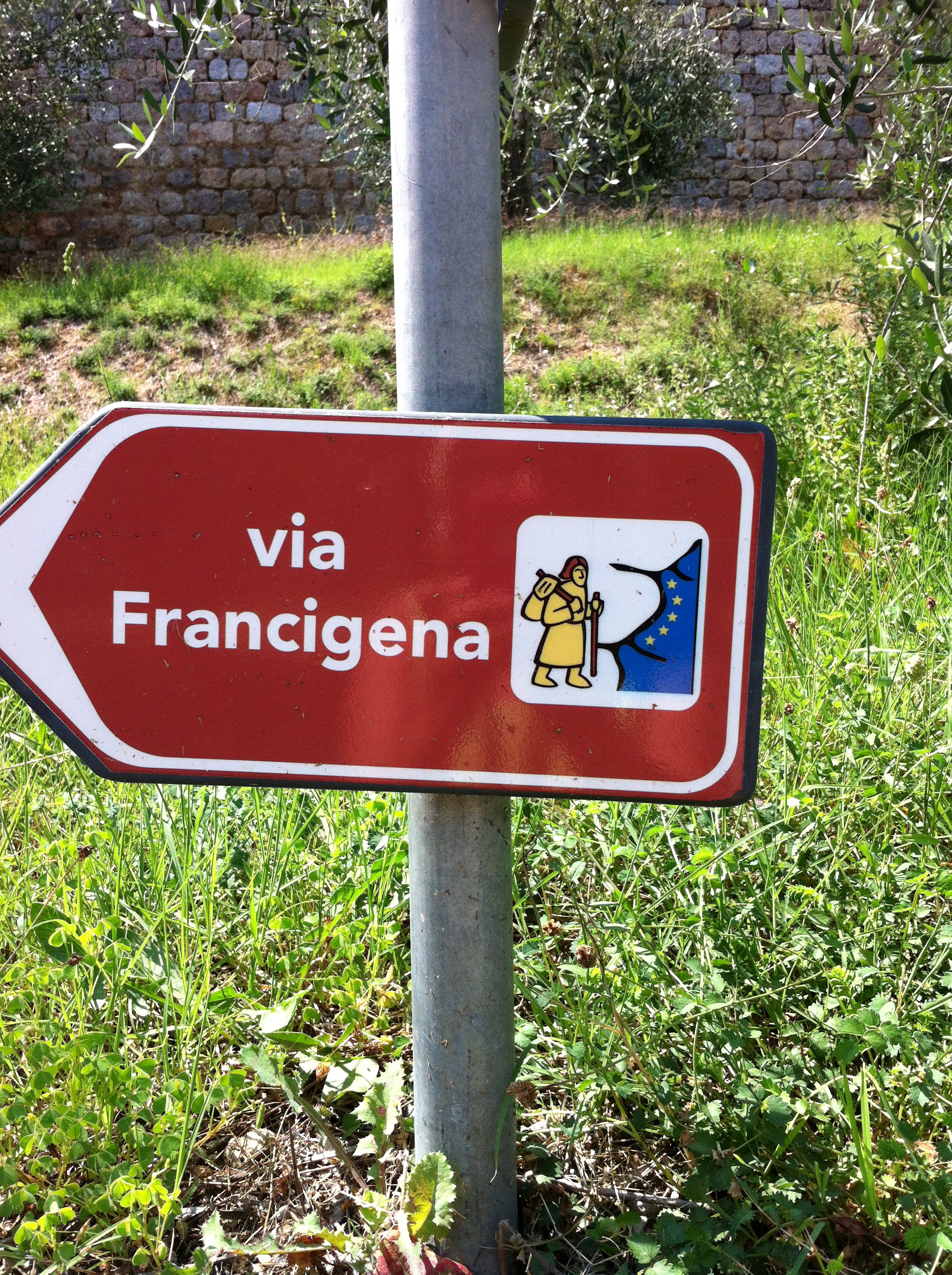
pilgrim sign

http://www.san-quirico.com/francigena_eng.htm#.VhkEdCikLJs

Morning prayers

Merton

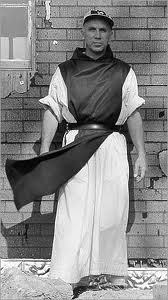
Thomas Merton produced a beautiful collection of the sayings of the Desert Fathers. There were Desert Mothers, too, but this morning, I had been thinking about Merton specifically. He’s been on my mind of late because he’s been in the news again, thanks to Pope Francis’ reference to Merton in his recent remarks to our US Congress.  The photo above has been taped the wall of my study for the last year. I’m using it as a way into an icon of St. Ansgar–an icon I’m writing at a snail’s pace. Merton is there because, like Ansgar, his monastic life grew from Benedictine soil. I had also endlessly researched what monks might have worn in the 9th century–and in the end, gave up, and went for anachronism, using a version of robes derived from a statue of St. Ansgar in Copenhagen, and the habit in this photograph of Merton.  Ansgar, far from being enclosed, was a missionary monk, eventually becoming an archbishop, and as much as he sought asceticism, and even martyrdom, he was drawn into the life of the world by his gifts. Thomas Merton was, too, and I’ve always loved the tension in his writings and journals, between the man who sought silence, and the man who must write. Merton was one of the people who drew me into a professional religious life, partly because of his complexities, mostly because of his journals, where so much vivid experience and observation are integrated through the writing. In his book on the Desert Fathers, called The Wisdom of the Desert, one saying has stayed with me for the many times I have felt overwhelmed or don’t have any idea of what to do next. I thought of it this morning, because of Merton, and because of the beautiful quiet of the dawn, today; it became a prayer. It’s short: “Abbot Pastor said, ‘Any trial whatever that comes to you can be conquered by silence.'” I don’t know if that’s true. But I come back to it, many times. I’ve really found it useful in ministry–the art of keeping quiet, very illuminating and freeing. Merton said, somewhere, in one of his journals, that the silence of prayer was where he heard the cries of those who suffer most clearly. That, I know, is true, for me. And there’s another silence, too, that heals, and opens into peace and hope. That’s the silence I will seek today.