Friends on the Road

Two of my friends are making a pilgrimage in Italy for the next few weeks. They are walking a portion of the Via Francigena from Sienna to Rome.  This morning, one of them posted a message that their bank card had been swallowed by a bank machine. This will disrupt their carefully planned journey, as the bank in the town where they are staying is closed today. They will be safe, though, staying at a local hostel.  I loved coming across the signs for the Via Francigena route in Tuscany, a small figure of a pilgrim and a rucksack and staff, with an arrow marking the next direction or turn. My friends been sending photographs of the journey, of rolling hills, plowed fields, mist on distant mountains, and the backs of pilgrims, moving through the landscape. Not far from them, along the coasts of the Mediterranean, refugees flee their countries, desperate for safety, dead children wash up on shores, masses of people move toward the unknown, driven by fear. Other friends, returning from a recent visit to Greek islands came back saying, “we have no idea” of what’s happening, the desperation, the need for care, shelter, and humanitarian relief.

My pilgrim friends love to walk–they have undertaken pilgrimages in the past, and they have looked forward to this one for a couple of years. I know they are safe, and will find ways to communicate should there be dangers. They are people of faith, too, who walk with prayers in their hearts. Both of them live lives of grace-filled service. This morning, they are walking on well-traveled paths at least 10 centuries old, and they know where they are going. They have a home waiting for them when they return.  My prayers are with them, and my prayers are with those who are refugees, whose journeys are forced upon them, fleeing violence and terror. For all those who are wandering, today, far from home, with or without maps, on journeys planned or unplanned, in hope or fear: may all be safe; may all find shelter; may all be welcomed by those they meet along the way.
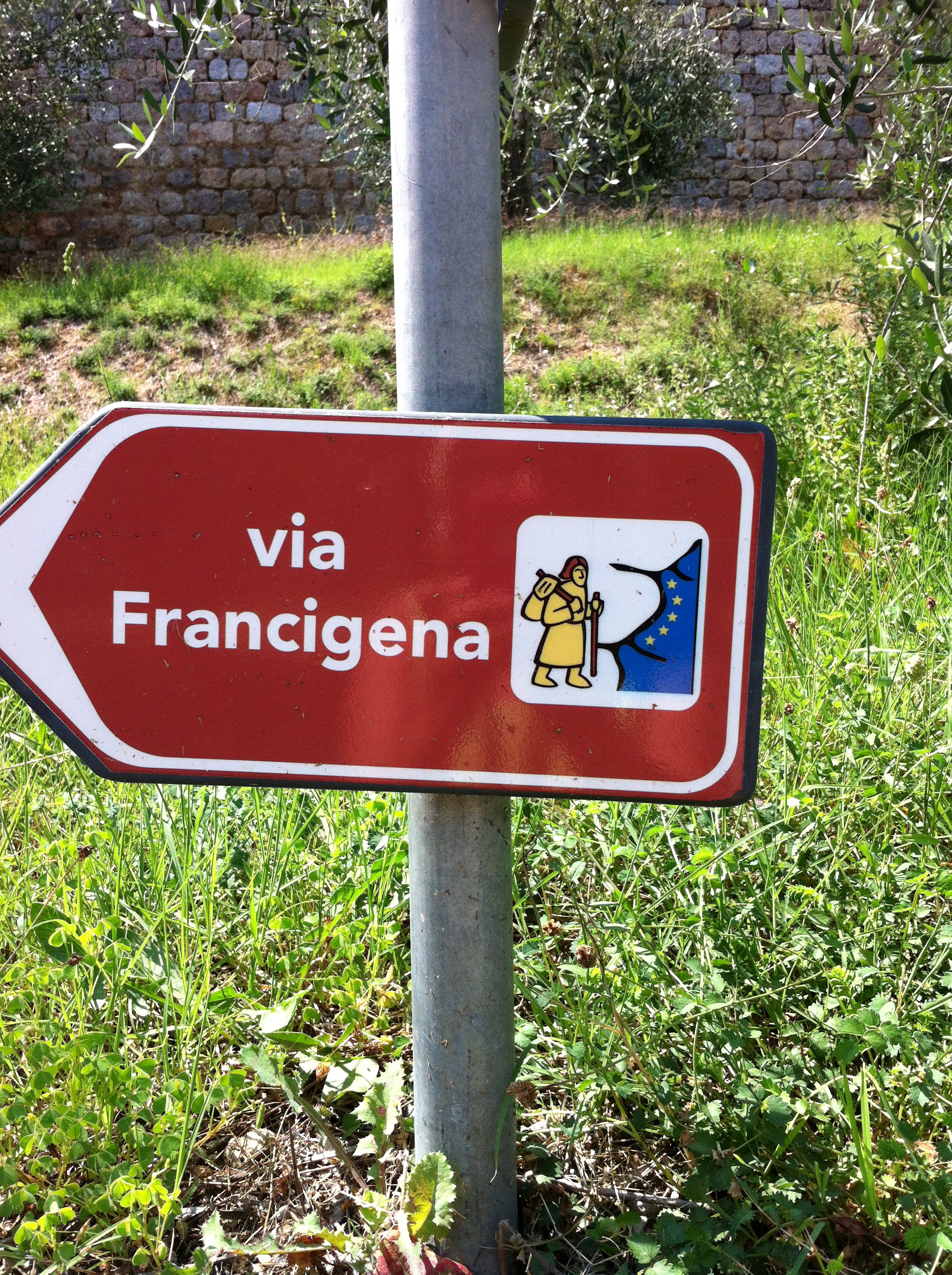
pilgrim sign

http://www.san-quirico.com/francigena_eng.htm#.VhkEdCikLJs

Morning prayers

Merton

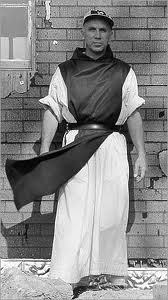
Thomas Merton produced a beautiful collection of the sayings of the Desert Fathers. There were Desert Mothers, too, but this morning, I had been thinking about Merton specifically. He’s been on my mind of late because he’s been in the news again, thanks to Pope Francis’ reference to Merton in his recent remarks to our US Congress.  The photo above has been taped the wall of my study for the last year. I’m using it as a way into an icon of St. Ansgar–an icon I’m writing at a snail’s pace. Merton is there because, like Ansgar, his monastic life grew from Benedictine soil. I had also endlessly researched what monks might have worn in the 9th century–and in the end, gave up, and went for anachronism, using a version of robes derived from a statue of St. Ansgar in Copenhagen, and the habit in this photograph of Merton.  Ansgar, far from being enclosed, was a missionary monk, eventually becoming an archbishop, and as much as he sought asceticism, and even martyrdom, he was drawn into the life of the world by his gifts. Thomas Merton was, too, and I’ve always loved the tension in his writings and journals, between the man who sought silence, and the man who must write. Merton was one of the people who drew me into a professional religious life, partly because of his complexities, mostly because of his journals, where so much vivid experience and observation are integrated through the writing. In his book on the Desert Fathers, called The Wisdom of the Desert, one saying has stayed with me for the many times I have felt overwhelmed or don’t have any idea of what to do next. I thought of it this morning, because of Merton, and because of the beautiful quiet of the dawn, today; it became a prayer. It’s short: “Abbot Pastor said, ‘Any trial whatever that comes to you can be conquered by silence.'” I don’t know if that’s true. But I come back to it, many times. I’ve really found it useful in ministry–the art of keeping quiet, very illuminating and freeing. Merton said, somewhere, in one of his journals, that the silence of prayer was where he heard the cries of those who suffer most clearly. That, I know, is true, for me. And there’s another silence, too, that heals, and opens into peace and hope. That’s the silence I will seek today.

Reading Kirk Byron-Jones

Kirk Byron-Jones’ book Fulfilled is worth a read from the first sentence on.  There’s something about his lavish joy in language that entrances the heart. I’ve loved his preaching, and still think he was one of the best keynote speakers I’ve ever heardFulfilled at our annual Synod Assembly some years ago, here in New England. Fulfilled brings back the sound of his voice, and his rich wisdom.  I love reading his works on ministry and preaching because he names the hollow places, the times of emptiness and discouragement, the fragility of relationships, the strain of work that continually surprises and makes demands.  Even though one consents to all the pushes and pulls of ministry, nevertheless, one gets worn out. Byron-Jones names this fatigue and seeks to minister to it.  I have yet to read a book of his without coming away feeling strengthened and encouraged for the work I do.
Fulfilled begins with three scripture passages that speak of God’s promise to pour out water on those of us who are thirsty, water that becomes in us a well of life: Isaiah 12:3; Isaiah 44:3; and John 4:14.  He writes “Though water is present in all three scriptures, it is the lavish nature of the water that captures my heart.” Lavish. Like him. Then, he goes on to say something that I want to claim for myself, too: “I no longer can tolerate the disconnect between the over-flowing spiritual sustenance named in these texts and the sense of barely making it in ministry.”  It’s a good sentence to claim when dry times come upon us. In Fulfilled, Byron-Jones imagines there are other ways of “living and leading from spiritual and emotional abundance as opposed to scarcity, to live and lead on “Full” as a way of life, as opposed to “Empty” as a way of life.” If I were in his congregation, and heard that sentence, I would say, “amen.” Here’s the link. It’s worth it. http://www.amazon.com/Fulfilled-Living-Leading-Unusual-Wisdom/dp/142675793X

Pondering the mountain

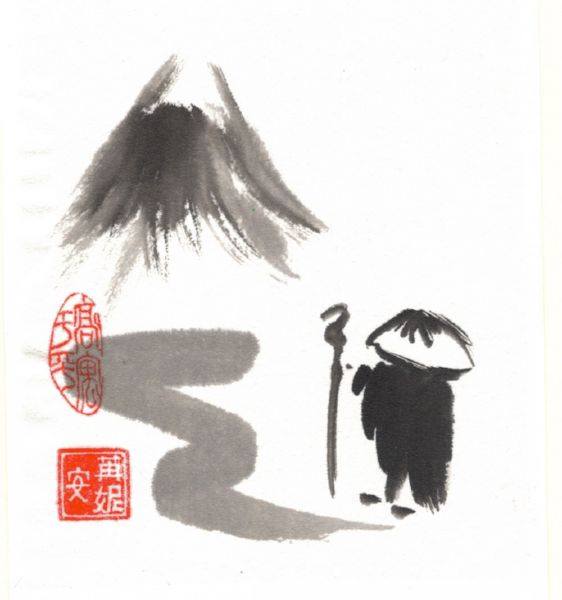
climbing the mountain

Yesterday, I had the good fortune to spend time at a monastery in Connecticut. It was a retreat for a church council who have a kind of mountain in front of them. Like many churches in New England they struggle with issues involving older buildings, shrinking towns, less young people, the stony nature of mission fields in our region. But something extraordinary happened in our time together. We told stories of times our needs were met in our faith community. They became stories of times we were met by God in community, in worship, in service. In the simple act of listening, and then sharing what we heard, the mountain became something less fearful, something more inviting, something to be curious about. And possibly something, also, that we could actually climb, even the freedom to decide, maybe we don’t want to climb this particular mountain.

What struck me was the longing in the group to spend more time in prayer and quiet, to focus on worship, and let go of the busy-ness they were feeling, spiritual hunger for time with God. By the end of the session, we were talking about what we could let go of, so that we would be freer to spend time listening to God, to each other, and to have more sabbath time. In terms of climbing mountains, it was a moment where we put down our packs, and took out the things that we didn’t need.

I spent some time this summer in the mountains, myself, on both sides of the country: the White Mountains, and the upper end of the Appalachians in Maine, driving through them, alas, not hiking; and also in California along the coastal ranges. I was astonished at how many ways human beings and animals had found to make paths up them and through them, often following river beds, but sometimes you could tell the path was made by sheer doggedness. One morning, on the top of a ridge, in California, I counted at least six different footpaths, all leading up and over, traversing ravines, hummocks, knots of woods. The same was true in the mountains here at home, many trails, many possibilities, easier climbs, harder climbs, climbs along rivers, climbs across rock faces.

The mountain is still a mountain. There are many ways through.

Last Day of 2014

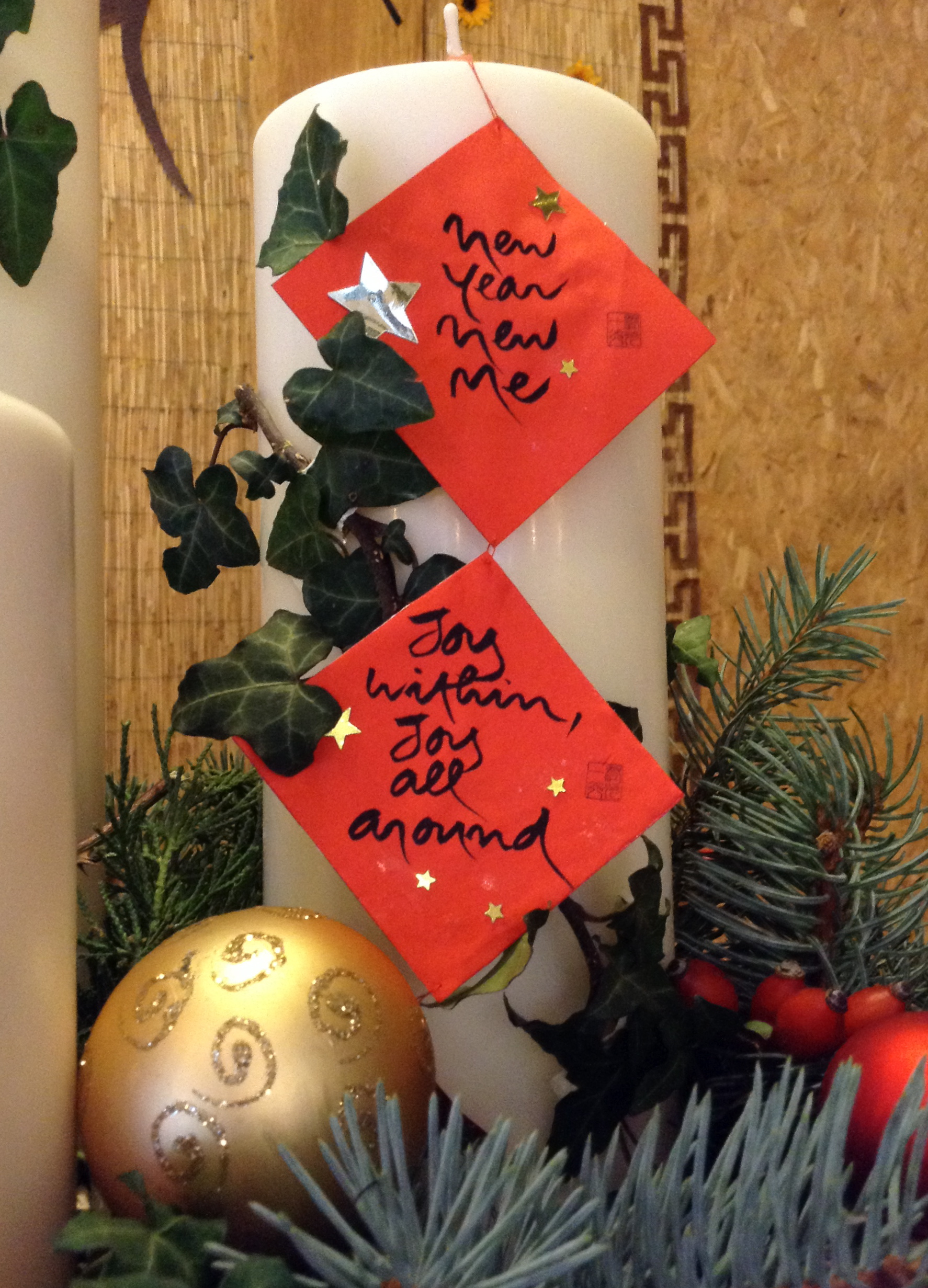
Today, it’s finally cold in Massachusetts. On our walk this morning, the ground crunched in a satisfying way; the sky is that deep blue of the north; the ocean is deep blue reflecting the sky; and it was too cold to stand still in the field. The leaves on the plum tree in our front garden are almost all gone, and the few brown and purple ones that remain are crisp with frost.  We had a watery Christmas, a foggy Christmas, actually, with lights gleaming through the mist; the cold today snaps us back into winter. I am so conscious of the challenge to hold the twelve days of Christmas in the wake of the secular waves of holiday-making. We gave up television long ago, and also shopping in malls. We’ve stayed close to the earth here at home, and close to the liturgical rhythms, both in Christian and in Jewish tradition. This year the last day of Hanukkah fell on Christmas Eve. That night, we lit both our Hanukkah candles, and our Christmas candles, flames joining flames in prayers of gratitude and of hope, for the Light that comes into the world in God’s Word.

This morning, on the last day of 2014, all is quiet in the house, like a held breath in the middle of meditation. I am thinking of Thich Nhat Hanh, still in his in-between sleep in the aftermath of his brain hemorrhage.  Last year, at this time, he gave a teaching on making the new year truly new. http://plumvillage.org/news/how-to-make-your-new-year-truly-new/

New Year at Plum Village

It seems to me that all our inner and outer life, our thoughts, dreams, visions, daydreams, imaginings, actions, and words are about incarnation, spirit and matter mattering, whether we “are” Buddhist, or Christian, or Jewish. Irenaeus wrote in the third century: “Because of his boundless love, Jesus became what we are that he might make us to be what he is.” Thomas Merton writes of Christmas Day, “today, God the Father makes all things new, in his divine Son, our redeemer…” The newness is continual, and happens in each moment. Happy New Year, and Merry 7th Day of Christmas.

Where the name came from

This summer, when we were traveling in France, we drove and walked through parts of southwest France famous for their plums. Plum Village was the high point of the places we visited, where Thich Nhat Hanh was in residence, in the heart of the orchards of plum trees, fields of sunflowers, woods and hay fields. After Plum Village, we stayed in a farm house called Domaine de Touille, high on a hillside in a village called St. Urcisse, near Agen. There on the grounds, the plum tree near the house was fully ripe, and plums fell gently, throughout the days we were there. We picked them up in passing, casually, and bit into the sweet fruit; the taste stopped us in our tracks, and we stood, slowly eating the fruits. The plum tree there became an image of abundance unearned, the grace of a tree in the fullness of time. The ground underneath it was covered in fallen fruit. The plums were small, and rich in taste, and made us think of plum wine. Our host made plum jellies, plum sauces and plum compotes and stuffed their fowl with plums. Here at home, a plum tree grows outside my house, and in the late summer and fall, the tiny plums are sweet food for many birds, and they, too, fall gently, with a quiet sound, like a very heavy raindrop.

Years ago, when I was training as a spiritual director, our teacher compared spiritual direction to the making of fruit jam. First, there is the experience of something offered, without our doing anything, the way a beautiful fruit tree offers her plums. Then, there is the tasting, the discovery, the surprise; then a harvest, and the making of a jelly or jam, a slow process, with many steps, before the beautiful clear jelly is stored away until needed. Then, in the dead of winter, when we take it out and taste it, the whole experience comes back again, the seeing of a tree full of fruit, the tasting of plums, the savoring of its sweet richness. This morning, we are starting a small spiritual direction group here, only four of us, but we’ll bring our memories, experiences, stories, dreams, and prayers, and it will make for a sweet rich conversation. May it be so for you, today.

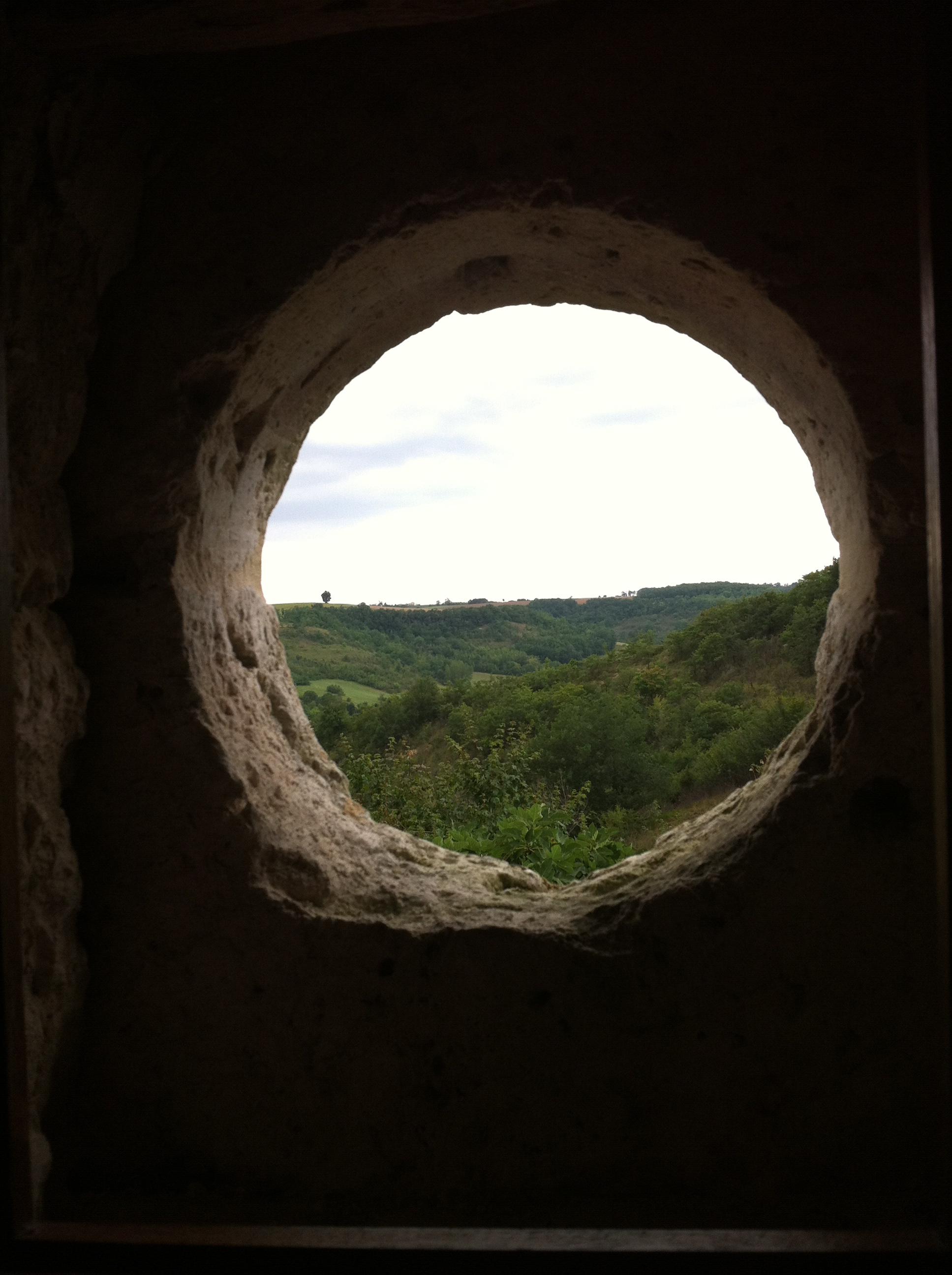
sturcisse window

Prayers in September

Privet Hedge Turning

We are observing Rosh Hashanah in our community and our family.  As I was watching the leaves on our privet hedge, slowly turning from green to red, I was reminded that Teshuvah is a process, and takes place every day, over time, completely at once, and always already not yet, that dialectic of being and becoming. Sometimes it seems to be always a process of turning, turning, turning, in a dance with the Divine; it happens again and again, as we come round right, like the Shaker tune. I am listening for the shofar.

This September, several people in our community have been diagnosed with cancer, or have been faced with new information about their illness.  Below, a couple of prayers I posted on Facebook.

September 23: I’ve been thinking alot lately of friends who have cancer, and sending prayers for their healing. I’ve taken to visualizing people’s blood cells coursing through their bodies, and sending prayers for healing, and prayers of blessing with each cell, light, and peace, and comfort, cancer be gone!!!

September 26: More cancer prayers:
To all cancer cells everywhere, you can stop now. We know once you were originally ok cells, but you got confused, and now you just need to stop and listen. It’s time to shut off those processes that make you so excitable and cause you to multiply. Slow down. Take a nap. Shrink. All will be well. You can transform, take all that energy, transform, and become light. Let God’s sweet kindly hands heal you and help you let go; you can be different sorts of cells, healthy, happy life-giving cells. You don’t have to do this anymore, just rest now, and sleep and transform. Please, dear Lord, come to the aid of all who need your help and kindness; give them strength and peace, and heal them of cancer. Amen

New at this

One of the beautiful walks on Cape Ann is a short one, around a reservoir known as Goose Cove. Truth be told, I’ve never seen geese in the fresh water reservoir, only in the saltwater Cove itself. In the reservoir: ducks, yes, seagulls, yes, geese not yet. Having recently come home from a trip that included a visit to Plum Village in France, we practiced our mindful walking today around the water, in the leafy shade. One foot in front of the other, each step a step of peace, or so we hope. And we remembered the lovely serene face of Thich Nhat Hanh, as he taught in this year’s Summer Retreat, saying gently, with every step, “I have arrived” Step, “I am home.” Step, “in the here,” “in the now.”

“You have an appointment with life,” he said. Today.

http://plumvillage.org/mindfulness-practice/walking-meditation/