Tag Archives: daily practice

The Blueberries Are Not Yet Ripe

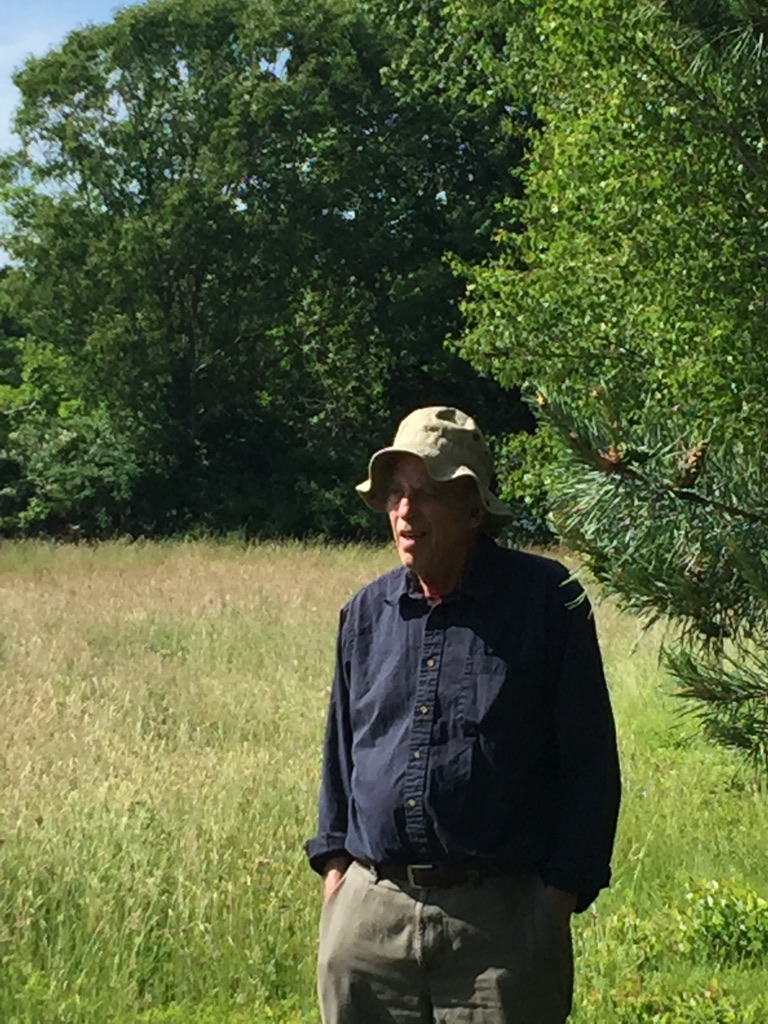
Beautiful Willy last summer in the field out back.

It’s mid-June, and the blueberry bushes have flowered, petals fallen, and tiny green berries have begun to take shape. These will ripen about mid-July, but my beautiful husband Willy is not here to pick them, to celebrate them, to put them on his oatmeal and enjoy their tart “wake-up” taste on his tongue. He died four days into Passover, on April 19th, two days after Easter. There was a rainstorm that morning, and startling thunder. Later that afternoon, our Rabbi told me it is said that it always rains when a zaddik dies.

On Sunday it will be two months since his death. I hardly know how to write any more. I had kept up with our Caring Bridge entries, even writing a final one a few days afterwards, but I’ve not written much since then. I’m writing this because I’m stunned by how little I understood the grief of spouses whose beloved has died. I’d been a pastor long enough and accompanied enough people in mourning to know the loss of a partner/spouse is devastating, to know there is nothing else like it, to know how it rips the psyche and the body apart. Even a peaceful death, as his was, is still a death–and heart-rending is not too strong a word. Even if it was expected, as his was, there was nothing that could have prepared me for what would happen afterwards. I had no idea I could hurt so much and still be breathing. If I ever go back to serving a congregation, I will have so much more awareness of the effort it takes a surviving spouse to keep going, and I will take so much more care. I am so sorry I did not realize the depth of that invisible pain.

Mornings and evenings are the hardest time for me, at least: transitions of night into day, and day into night, those edgy times not quite light, not quite dark. When I wake up, I reach for his pillows. I haven’t washed them because they still retain a faint fragrant memory of him. He loved the dawn, the sunrise, and we both used to wake up early for the morning. Now when I wake, I try to remember to do what he did–to greet the light with a blessing–Baruch HaShem. Remembering how he lived each day, because he cherished life, has ended up being the greatest comfort. I get dressed because he would have wanted me to. Lately, mostly to honor his memory, I’ve been eating breakfast on our screen porch, listening to birds, wandering out to the garden to see how things are growing. He did that in the mornings in summer. I bring him with me, trusting that he’s using my eyes. At night, like many bereaved spouses, I have trouble falling asleep. For the first few weeks, I slept downstairs on the couch in front of the TV, watching endless replays of the Bridgerton series on Netflix. They were love stories with happy endings, but they are not the sort of shows Willy would have watched. I apologize to him for watching them now, but I mostly fall asleep in front of them. Eventually, the cats wake me up to go upstairs; they don’t like late night TV. The bed is daunting–so empty of him.

On the day after he died, visitors came to sit with me. On that first day, 15 people came, 11 of whom had lost their spouses. As my niece, who also lost her spouse, put it: they knew to come. In the weeks since his death, my friends who know this landscape of loss have shared their wisdom with me, much of which boils down to having patience with whatever is happening, being gentle with myself, taking care of myself, not expecting much of myself, and one-day-at-a-timing it. It helps to know that they’ve lived through this. And just their presence is a comfort. His good friends come and don’t mind my talking about him endlessly. They want to talk, too, and that’s a relief. I have no idea how to answer the question: how are you. I rehearse answers: I’m fine. I’m terrible. I’m not ok. I’m ok. Lately, I’ve landed on this: “I have no idea how to answer that.”

Today, this mid-June day-was truly a beautiful day, as only a sunny June day on Cape Ann by the sea can be. I can’t say I was happy–but I did find something nice to wear. I did make toast and coffee. I did manage to go to the bank. I did do a laundry. This morning because it was warm and a gentle wind blew, I took the newly washed clothes outside to hang them on the line. When we got married, Willy asked me what I wanted for a wedding present. I said I wanted a clothesline. He was shocked. He was thinking jewelry. But it was true. I love hanging clothes on a clothesline, and I hadn’t had one since my children were small. For some reason, a clothesline meant home to me, and of all the things in the world I wanted to do, I wanted to make a home with him, a loving home, a kindly home. So he made me a clothesline, sunk the posts, strung the rope, in a perfect spot that catches the sun near a big fir tree. We both loved putting the clothes out. When I put them out today, I didn’t cry after all, but smiled instead into the morning light, and thanked him for the clothesline, for the home we made together, and the home that he was and is for me.

Blueberries for Breakfast-July 11, 2021

Wild Blueberries next to our house.

Yesterday marked a year since my husband was diagnosed with a brain tumor, one of the not good kind. I think that I’ve written here a few times since then, I believe, reflecting on some of the changes that have happened. The year and-a-half of the pandemic was marked by loss for us, as it has been for so many, with deaths of friends and family, some expected, some not, some from long-standing illness, one from Covid. The brain tumor was one more surprise of this year. I’ve been using Caring Bridge, mostly, to update friends and family of what’s happening every month regarding his treatment and state of being. So far, he does well.

I’m finding my way every day with whatever presents itself. We are living so close to the minutiae of daily life, in part, because attending to the care of someone living with a brain tumor requires that–attention to the minutiae: what will be the challenge of the day, how is the fatigue, is there enough protein in the house, can we go for a walk, or what music will wake up the brain, what healing things can we do. It’s not that we speak of these out loud every day, though some days we do. The many considerations are under the surface all the time. Every day, there are things and events that move us to tears, whether it’s in the immediacy of our personal life–like a grandchild’s sudden smile–or in the public sphere, the ongoing pandemic, the threats to democracy, the suffering of so many people and creatures, the losses of habitats, the droughts, fires, floods, storms. But next to that, next to those tears, is beauty–so jarring to live with both, the suffering and the beauty, every day, and to learn each day to expand the edges of compassion, to keep my seat and bear witness, to act, if I can, in ways of weaving justice, which is very limited right now, and to keep loving.

I went from a very public life as a pastor and community religious leader to a very hidden life. There’s relief and loss in that. Relief for being able to put down some responsibilities, and loss for being able to put down some of those same responsibilities. I miss my public life and our lively community, and I cherish this new very familial and private one.

In this hidden life, courage and perseverance have become the loving virtues that shine most brightly to me, mostly my spouse’s immense courage and devotion to living the fullness of existence. And in the wider world, the courage and perseverance of so many people working to create a better world, who never give up the work of hope and justice. On the small scale, our home scale, the virtues are the same. Why do I rise in this morning? How will I live this day, how will I love, how will I serve?

Today in our hidden life, my beloved went out early in the dawn to pick wild blueberries. It’s a beautiful morning, very mild, post tropical storm Elsa. Picking blueberries is not an easy thing for him. His balance is uncertain on uneven ground, so he has to find a way to set his feet on the granite and moss without feeling like he might fall over. His right hand hand isn’t working very well, from the tumor, so sorting through leaves and picking the berries off takes great concentration. “I dropped quite a few” he reports when he comes in, “good for the birds.” While he was picking, the catbirds talked from the birch tree, and a chickadee dropped into the bushes to feed on the berries, just a foot away from his gentle hands.

Later, we made oatmeal, and ate the berries. I haven’t presided at a communion service since March 15, 2020, when we closed our building. And in October, I left my call to be able to be here at home. But these blueberries, this oatmeal, this beautiful morning, these loving hands that picked the blueberries, the birds in the birch trees, the wet ground, the drift of cloud, my spouse lifting his spoon carefully, this moment, this, too, a communion.

Mid-October 2016

red-leaves

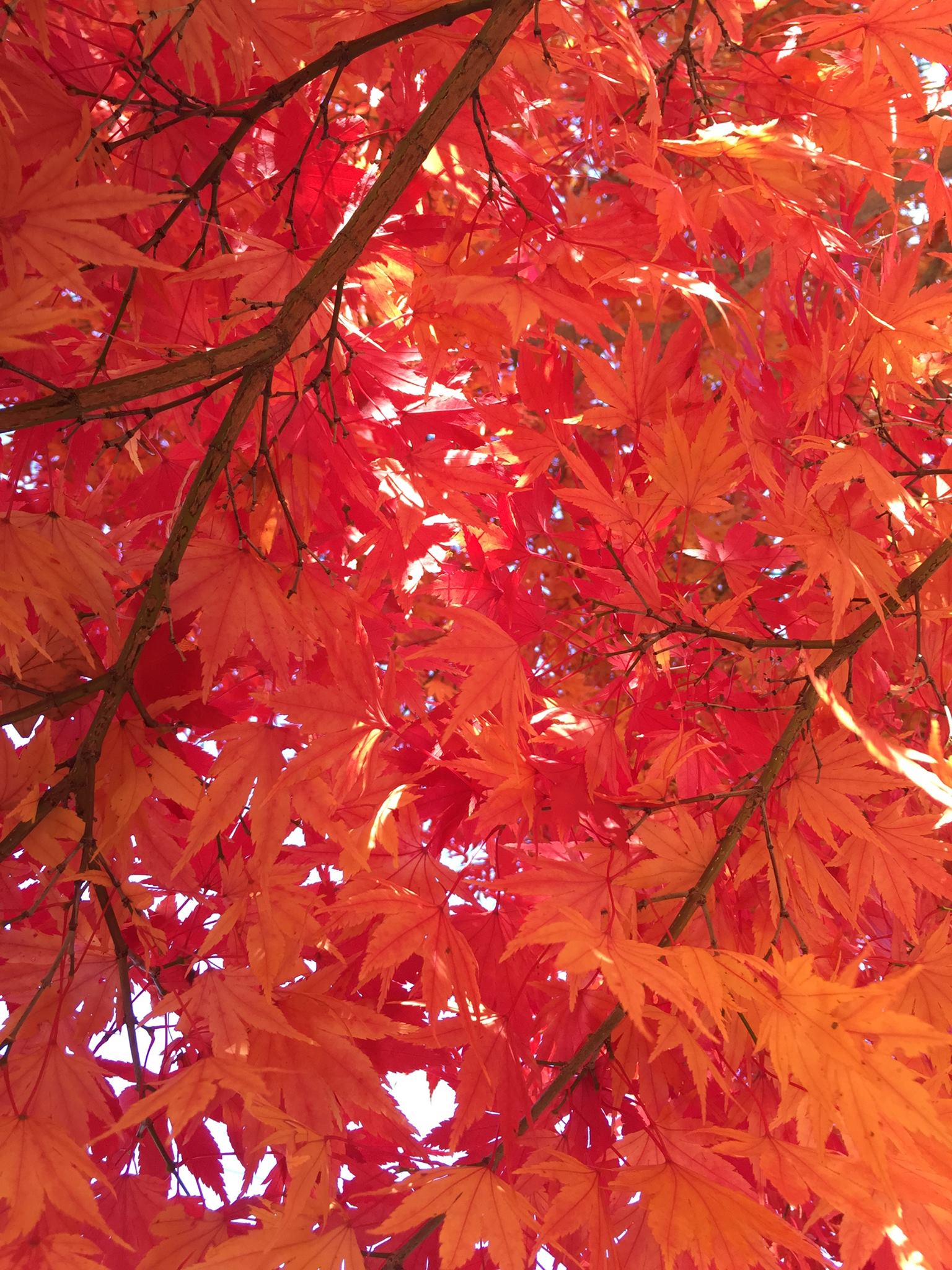
Yesterday’s walk down the sidewalk proved to be an exercise in wonder. Everywhere we looked, our eyes feasted, on the burning beauty of autumn overflowing, the air as clear as clear water; sky and sea blue beyond blue. At the farmer’s market, the bins were cornucopias of the harvest, greens, oranges, reds of squash, beets, onions, potatoes, the last tomatoes, fresh apples.

And all the while, in my mind’s eye, next to this beauty, are juxtaposed images of devastation, from Syria, from Haiti, from North Carolina, the wake of storms, floods, and bombs. Like most people, I’ve been torn apart inside by what’s happening in our country especially during this presidential election season, by the ugliness, the degradation, by the violence, the on-going intersection of injustices of racism, sexism, poverty. On the one hand, all the hatred is out in the open;  we can see it. On the other hand, I’m terrified because the hatred is out in the open, and it seems like there’s a license to kill figuratively and literally, with guns and with words. It’s a raw time. My spiritual struggle is how to speak, and to act, with love, in such times, when the temptation every day is to sink into fear, anger and despair

And then I remember the stories of incredible faith, hope, and courage coming from Aleppo, from Haiti, from children, from the songs of whales, from the breath of the earth, and the Spirit’s sighs too deep for words.

This morning, I read a wonderful column/blog post by a fellow clergy-woman at https://revgalblogpals.org/ I’m sharing it below, because it’s a wonderful affirmation that words matter. And that we rise for another day, to speak words that create worlds–to borrow Abraham Joshua Heschel’s phrase. May our words make worlds of compassion.

Words Matter.

Lent II Sunday: Of Icons and Holy Hens

holyhen

Tomorrow, I leave for a 5-day painting retreat at Camp Calumet, in Freedom, New Hampshire. All evening, I’ve been packing up paints, brushes, boards, boots, mittens, warm coats, books and poetry, bits of cotton, random pieces of string I might need, masking tape, pencil sharpeners. The car is becoming a mobile studio and library. This trip has become an annual Lent pilgrimage, the drive north to the mountains through snow now a part of the expectation in this season.  This night before the retreat is one of the evenings of the year when I permit myself the luxury of perusing books of poetry, without feeling like I need to be doing anything else. It’s as if the retreat has already begun. Who will come along? Which poet this year? I find Gary Snyder’s This Present Moment; the cover depicts a snowy landscape, and just because of this, it goes in the bag–Tom Killion is the artist who designed the cover, a long-time friend and collaborator of Snyder’s. I’m quietly thrilled I will have several days to savor these poems. Sometimes a poet’s voice becomes the voice that interprets one’s life–I’ve been reading Snyder for 40 years, and he’s as present in my mind’s ear as the present moment itself.  He’s been a meditation teacher for me, just in the way of his writing.

But by tomorrow afternoon, painting will become the order of the day, this week. We will be working on an icon of St. Francis. It seems appropriate given this morning’s Gospel, to be preparing and praying about Francis this Lent, his conversations with birds and beasts, trees, water, sun, moon and stars.  I love the image of Jesus hovering over Jerusalem like a mother hen, or mother bird, calling his brood to him, gathering them under his wings (or in this case of mixed imagery, Jesus as a “her” gathering the chicks under her wings).  Francis shared that yearning. Tonight, there is a pause in the evening’s packing, a time for gathering all the parts of oneself, as a hen might gather her chicks, up into an inner shelter, a breathing in of anticipated peace, the quiet room, the laundry finishing up, everyone else already asleep.  Lent is just such a pause in a long life really, at least tonight has that feel–the pause of Holy Saturday, though it is weeks away, the pause of a mother bird, as she settles on her nest, the pause between breaths, the pause between death and life.

Time Changes

japanese maple marblehead

On Sunday morning, in church, we prayed for people in transitions.  The person who offered it prayed for people going through job transitions, or who were moving, or entering a new marriage, or having a baby, or people who have had a change in health, or have lost a loved one.  It was a prayer that reminded us that any change, even a change we initiate, and look forward to, like the birth of a child, or a new relationship or a new job, brings some turbulence with it. A prayer for transitions seemed like a wonderful prayer, too, for a transition of the season. We’re more than mid-way through autumn, and on the far end of fall foliage; there’s less leaves on trees now, and more on the ground to rake. Today because of the end of daylight savings time, the sun rises earlier by the clock, and sets earlier, and like other animals, I’m feeling the transition, too, moving inwardly towards hibernation, and stillness. In our church, we just passed through the three-day observance of All Saints, possibly one of my favorite feast days in the Christian calendar. In Celtic spirituality, it honors the thin places and thin times, where, as they say, the veil between worlds is very thin, and the passage between them is easier. The Feast honors Christian community and its transitions through time, like birth and death, baptism and burial, the sense of generations rising, dying, rising, walking together through the ages, the extraordinary ordinary saints, perfectly imperfect, graced and in need of grace.  It honors, too, the sense of eternal in the every day; despite disconcerting practices like setting clocks backward or forward, there’s a stability in time, though time is always changing. In church, which has its own strange notions of time, we sometimes sing at All Saints a hymn based on St. Patrick’s Breastplate. While the whole hymn is incantatory and invigorating, one verse in particular speaks to me of the eternal within time, impermanence permeated with ultimate reality:
“I bind unto myself today
the virtues of the starlit heaven,
the glorious sun’s life giving ray,
the whiteness of the moon at even,
the flashing of the lightning free,
the whirling wind’s tempestuous shocks,
the stable earth,
the deep salt sea,
around the old eternal rocks.”

One of the original renditions of this hymn can be found here: http://www.ancienttexts.org/library/celtic/ctexts/p03.html

I bind unto myself today, the beauty of this gentle dawn, the fire of the turning trees, and the quiet of the leaf-fall.

Pondering the mountain

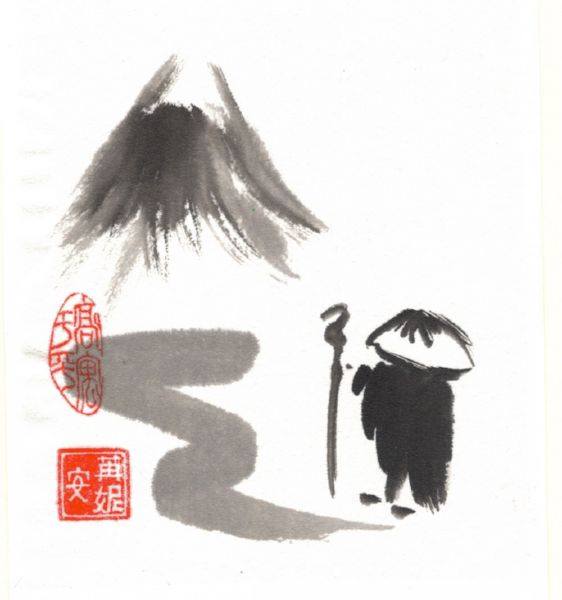
climbing the mountain

Yesterday, I had the good fortune to spend time at a monastery in Connecticut. It was a retreat for a church council who have a kind of mountain in front of them. Like many churches in New England they struggle with issues involving older buildings, shrinking towns, less young people, the stony nature of mission fields in our region. But something extraordinary happened in our time together. We told stories of times our needs were met in our faith community. They became stories of times we were met by God in community, in worship, in service. In the simple act of listening, and then sharing what we heard, the mountain became something less fearful, something more inviting, something to be curious about. And possibly something, also, that we could actually climb, even the freedom to decide, maybe we don’t want to climb this particular mountain.

What struck me was the longing in the group to spend more time in prayer and quiet, to focus on worship, and let go of the busy-ness they were feeling, spiritual hunger for time with God. By the end of the session, we were talking about what we could let go of, so that we would be freer to spend time listening to God, to each other, and to have more sabbath time. In terms of climbing mountains, it was a moment where we put down our packs, and took out the things that we didn’t need.

I spent some time this summer in the mountains, myself, on both sides of the country: the White Mountains, and the upper end of the Appalachians in Maine, driving through them, alas, not hiking; and also in California along the coastal ranges. I was astonished at how many ways human beings and animals had found to make paths up them and through them, often following river beds, but sometimes you could tell the path was made by sheer doggedness. One morning, on the top of a ridge, in California, I counted at least six different footpaths, all leading up and over, traversing ravines, hummocks, knots of woods. The same was true in the mountains here at home, many trails, many possibilities, easier climbs, harder climbs, climbs along rivers, climbs across rock faces.

The mountain is still a mountain. There are many ways through.

Where the name came from

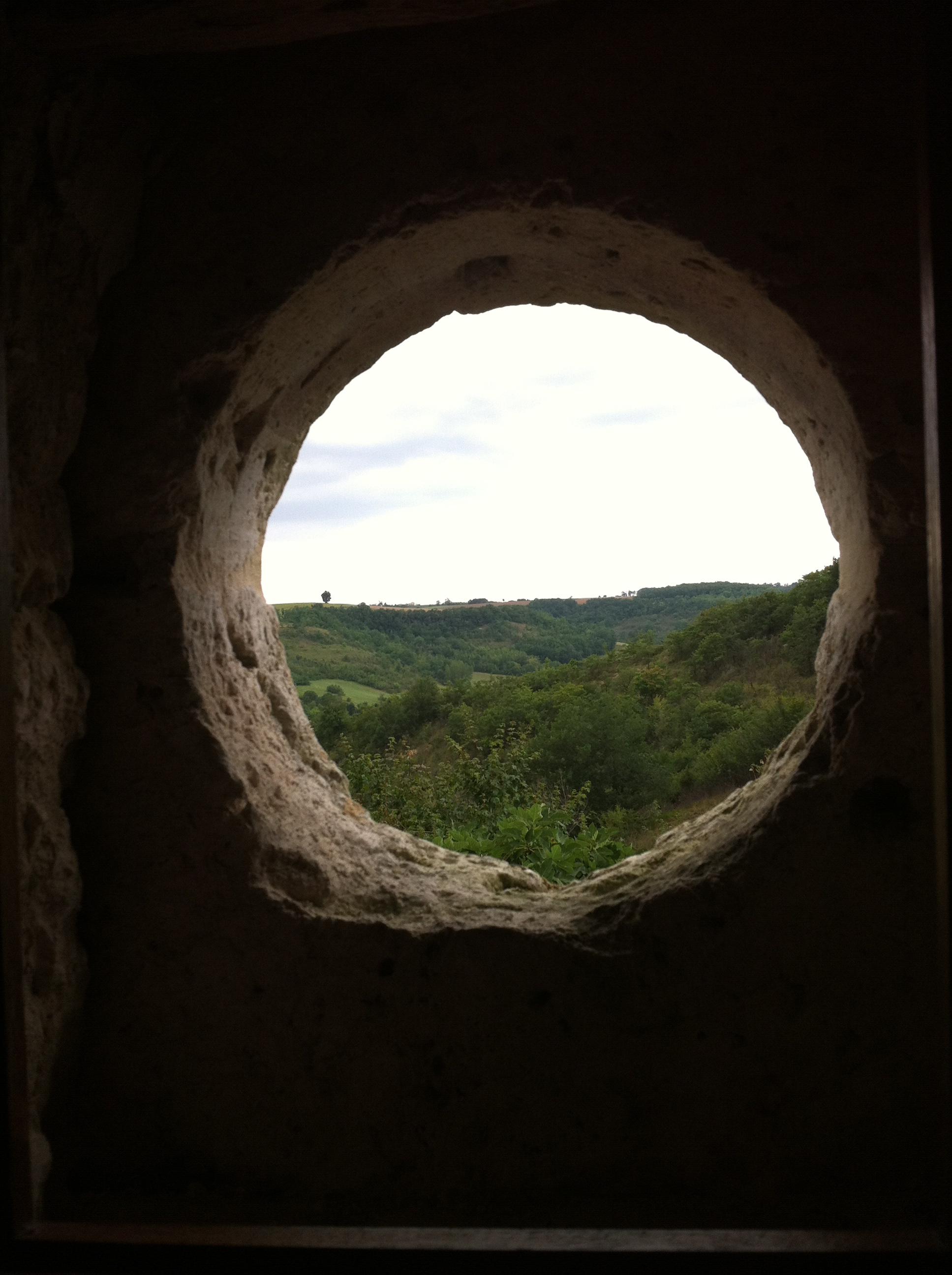
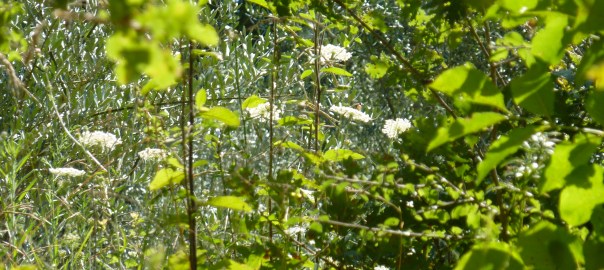
This summer, when we were traveling in France, we drove and walked through parts of southwest France famous for their plums. Plum Village was the high point of the places we visited, where Thich Nhat Hanh was in residence, in the heart of the orchards of plum trees, fields of sunflowers, woods and hay fields. After Plum Village, we stayed in a farm house called Domaine de Touille, high on a hillside in a village called St. Urcisse, near Agen. There on the grounds, the plum tree near the house was fully ripe, and plums fell gently, throughout the days we were there. We picked them up in passing, casually, and bit into the sweet fruit; the taste stopped us in our tracks, and we stood, slowly eating the fruits. The plum tree there became an image of abundance unearned, the grace of a tree in the fullness of time. The ground underneath it was covered in fallen fruit. The plums were small, and rich in taste, and made us think of plum wine. Our host made plum jellies, plum sauces and plum compotes and stuffed their fowl with plums. Here at home, a plum tree grows outside my house, and in the late summer and fall, the tiny plums are sweet food for many birds, and they, too, fall gently, with a quiet sound, like a very heavy raindrop.

Years ago, when I was training as a spiritual director, our teacher compared spiritual direction to the making of fruit jam. First, there is the experience of something offered, without our doing anything, the way a beautiful fruit tree offers her plums. Then, there is the tasting, the discovery, the surprise; then a harvest, and the making of a jelly or jam, a slow process, with many steps, before the beautiful clear jelly is stored away until needed. Then, in the dead of winter, when we take it out and taste it, the whole experience comes back again, the seeing of a tree full of fruit, the tasting of plums, the savoring of its sweet richness. This morning, we are starting a small spiritual direction group here, only four of us, but we’ll bring our memories, experiences, stories, dreams, and prayers, and it will make for a sweet rich conversation. May it be so for you, today.

sturcisse window

New at this

One of the beautiful walks on Cape Ann is a short one, around a reservoir known as Goose Cove. Truth be told, I’ve never seen geese in the fresh water reservoir, only in the saltwater Cove itself. In the reservoir: ducks, yes, seagulls, yes, geese not yet. Having recently come home from a trip that included a visit to Plum Village in France, we practiced our mindful walking today around the water, in the leafy shade. One foot in front of the other, each step a step of peace, or so we hope. And we remembered the lovely serene face of Thich Nhat Hanh, as he taught in this year’s Summer Retreat, saying gently, with every step, “I have arrived” Step, “I am home.” Step, “in the here,” “in the now.”

“You have an appointment with life,” he said. Today.

http://plumvillage.org/mindfulness-practice/walking-meditation/