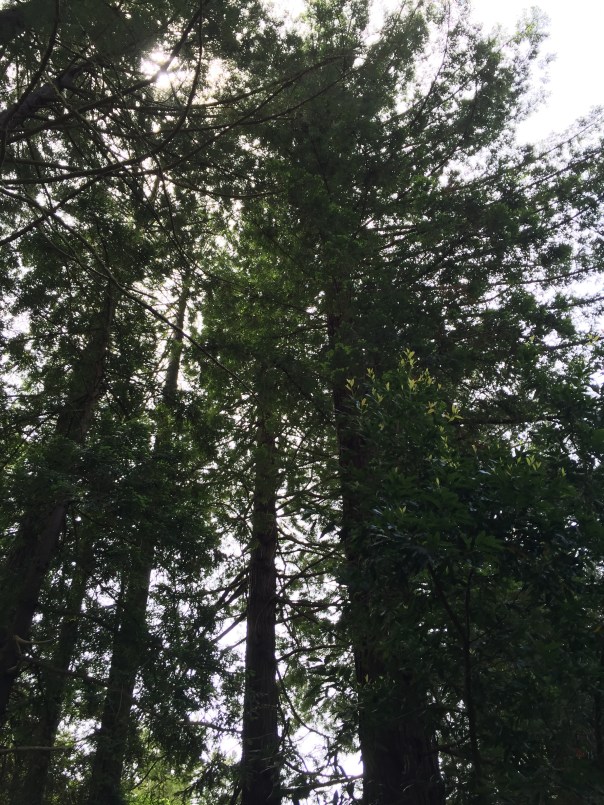
The trees in this picture may be burned now. I saw them in May on an epic drive down Rt. 1 from Carmel to Cambria, California. They are in the Julia Pfeiffer Burns State Park. We were visiting family there. California became home to my daughter some years ago. She was born there, but didn’t return until her early 20’s. She’s forty now, and I’ve been visiting the state regularly, a few times a year. We loved California when we lived there, and we love it still. California has suffered drought now, for over five years, and this year’s summer fires testify to a tinderbox landscape. The last time I drove up Rt. 101 to the airport, in spring, firefighters and trucks were busy along the edges of the road, putting out small blazes that started between the highway and the farm fields; sparks become flames quickly in such a landscape. My daughter spent some time in Israel several years ago, and came home convinced that the next big economic, political and social struggles would be about water rights. She has certainly experienced that in California, in her town, and around the state, as access to water has become critical, and hotly debated. During the recent fires, she called to tell me things were getting “apocalyptic.”Now toward the end of September, news of forest fires, floods, vast storms, violent shootings, home-made bombs in cities, military bombings, racism and bigotry, vitriolic presidential politics, divisive and abusive public rhetoric, here and around the world, appear almost non-stop on radio and television stations, in papers, magazines, and social media, permeating everyday conversation, and I agree, it’s feeling apocalyptic.
When we drove through Big Sur, fogs rolled up the cliffs, and drifted in and through the trees. The sun was shining up above, and the light filtered through the woods, shimmering on drifting wisps of cloud, the whole atmosphere cool, and slightly damp, despite the drought. It’s no surprise that cathedral pillars resemble trees–and vaulted ceilings resemble vaulted forests. We remember them in our bones; groves of trees are holy places. In the woods that day, there was still water running in one of the brooks, the sound gurgling down through rocks. When we entered the redwood forest there, all the sounds except for birds and the nearby stream, grew quieter. We grew quieter, the further in we walked. The forest had been burned before, some years ago, and we noticed right away some of the charred markings from long ago fires. We sat for some hours under the trees, marveling at their height, and their ancient impassive presence. But most of all we marveled at their resilience. Earlier this month, as I read and listened to the news of those fires through the forest in Big Sur, I wondered about the trees which had sheltered us that day. I sometimes feel their roots in me, in my body, that some part of me is as old and present as they were. I reach out to them through my body and mind, looking for them, wanting to shelter them in return. Consider the lilies, Jesus said.That phrase has become a symbol for the contemplation of all things living, for all creation. Consider the redwoods, the trickling water, consider the Pacific waves, and the mountains falling into the sea. Consider, even the fires that burn the forests, the interconnections of all our lives and the sorrows of the world. Consider the earth crying out, consider the voices of birds, the haunting call of a loon in the North Woods, consider the whispers and echos of now extinct species.
I checked on the fires yesterday, those still burning, new ones starting. May the rains come soon.

 The Plum Tree
You must be logged in to post a comment.