Tag Archives: remembering

Mountains and Rivers

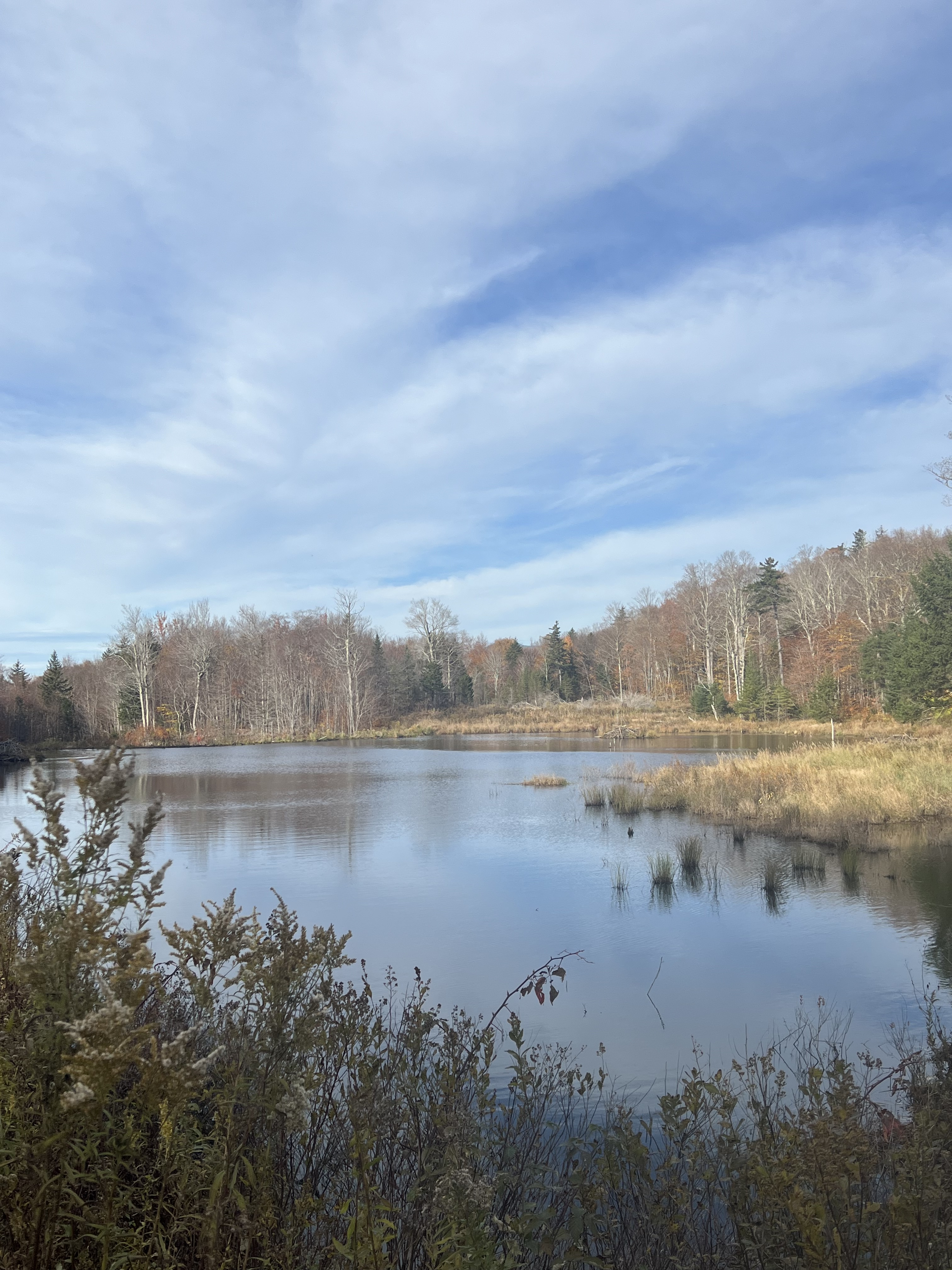
It’s November, late autumn, season of shedding and letting go. One of my spiritual teachers told me years ago, “wisdom is knowing what to take up and what to put down.” Or perhaps another way of saying it is, where to put one’s attention, or energy, or awareness. I’m sure wisdom is more than that, but I’ve loved the image of picking up something, whatever it may be, and putting something else down, or letting go. Right now, the beavers in this bog in the photo above are literally picking up sticks and logs to prepare for winter, and swimming with them through the water to their lodges at the far end of the beaver pond. Though you can’t see them doing it in the middle of the day. There’s a great wisdom living in them—the beavers—they are worth contemplating as teachers of creative adaptation, perseverance, enjoyment of their habitat. I’ve had the privilege of visiting this family for a year now. They, the beavers, are starting to prepare for winter and activity is slowing down though the branches and twigs of their winter stash keep increasing. I will miss them during their winter slow down. They don’t hibernate, it turns out but they do slow down.

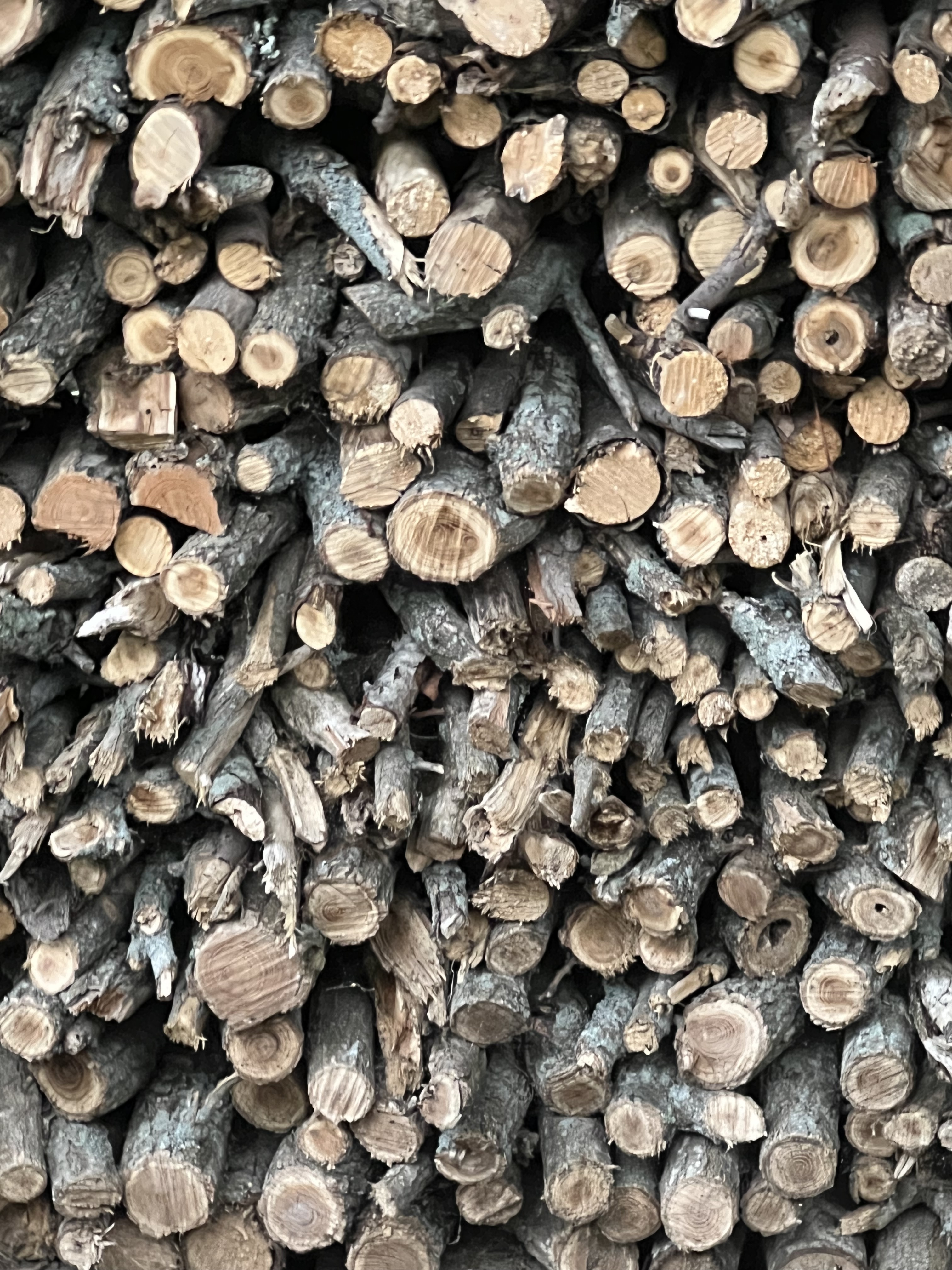
Another friend, who lives in a woodsy place, loves clearing up sticks and twigs in her yard, especially in this season. Her woodpiles are much neater than the beavers. But she too, has mastered the art of knowing what to pick up and what to put down.
Four autumns have passed since my late husband, Willy, died. So much of grief is about learning and relearning over and over what to pick up and what to put down. The spiritual teacher who gave me that piece of wisdom about wisdom was Sumati Marut, aka Brian Kelley Smith, a lion’s roar of a man and teacher and friend. He was at home in Christianity, Buddhism, Hinduism, a comparative religion scholar and joyful lover of life. He became Willy’s friend, which was wonderful for them both. He died, sadly, a couple of years before Willy. The sixth anniversary of his death was October 19th, autumn here, spring in Australia, where he lived. But I think of them both, the two big hearted, great spirited men, smiling at each other with so much love, and laughing and laughing. I am grateful for the remembered laughter, the joy in life, and the straightforward wisdom of doing what needs to be done, right in front of one. I think of the reading from Ecclesiastes so often read at funerals, “to everything, there is a season, and time for every purpose under heaven.” The beavers I watched all year seem to know that instinctively. Once there was a terrible rain storm here that damaged one of their lodges. The next day they were out repairing, slowly, stick by stick, mud pat by mud pat, their home, with care and gentleness. Not arguing with the rain or the heavens, or the mess, just knowing what needed to be picked up and what needed to be put down. Marut would say, “It’s like this now.”

The Blueberries Are Not Yet Ripe

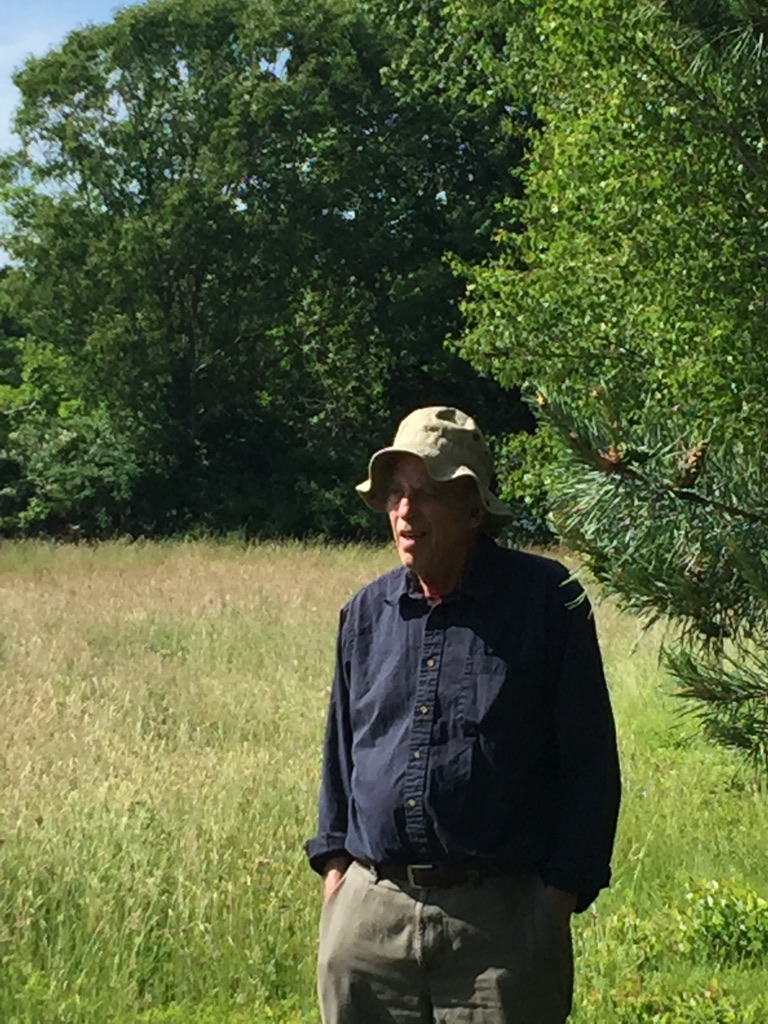
Beautiful Willy last summer in the field out back.

It’s mid-June, and the blueberry bushes have flowered, petals fallen, and tiny green berries have begun to take shape. These will ripen about mid-July, but my beautiful husband Willy is not here to pick them, to celebrate them, to put them on his oatmeal and enjoy their tart “wake-up” taste on his tongue. He died four days into Passover, on April 19th, two days after Easter. There was a rainstorm that morning, and startling thunder. Later that afternoon, our Rabbi told me it is said that it always rains when a zaddik dies.

On Sunday it will be two months since his death. I hardly know how to write any more. I had kept up with our Caring Bridge entries, even writing a final one a few days afterwards, but I’ve not written much since then. I’m writing this because I’m stunned by how little I understood the grief of spouses whose beloved has died. I’d been a pastor long enough and accompanied enough people in mourning to know the loss of a partner/spouse is devastating, to know there is nothing else like it, to know how it rips the psyche and the body apart. Even a peaceful death, as his was, is still a death–and heart-rending is not too strong a word. Even if it was expected, as his was, there was nothing that could have prepared me for what would happen afterwards. I had no idea I could hurt so much and still be breathing. If I ever go back to serving a congregation, I will have so much more awareness of the effort it takes a surviving spouse to keep going, and I will take so much more care. I am so sorry I did not realize the depth of that invisible pain.

Mornings and evenings are the hardest time for me, at least: transitions of night into day, and day into night, those edgy times not quite light, not quite dark. When I wake up, I reach for his pillows. I haven’t washed them because they still retain a faint fragrant memory of him. He loved the dawn, the sunrise, and we both used to wake up early for the morning. Now when I wake, I try to remember to do what he did–to greet the light with a blessing–Baruch HaShem. Remembering how he lived each day, because he cherished life, has ended up being the greatest comfort. I get dressed because he would have wanted me to. Lately, mostly to honor his memory, I’ve been eating breakfast on our screen porch, listening to birds, wandering out to the garden to see how things are growing. He did that in the mornings in summer. I bring him with me, trusting that he’s using my eyes. At night, like many bereaved spouses, I have trouble falling asleep. For the first few weeks, I slept downstairs on the couch in front of the TV, watching endless replays of the Bridgerton series on Netflix. They were love stories with happy endings, but they are not the sort of shows Willy would have watched. I apologize to him for watching them now, but I mostly fall asleep in front of them. Eventually, the cats wake me up to go upstairs; they don’t like late night TV. The bed is daunting–so empty of him.

On the day after he died, visitors came to sit with me. On that first day, 15 people came, 11 of whom had lost their spouses. As my niece, who also lost her spouse, put it: they knew to come. In the weeks since his death, my friends who know this landscape of loss have shared their wisdom with me, much of which boils down to having patience with whatever is happening, being gentle with myself, taking care of myself, not expecting much of myself, and one-day-at-a-timing it. It helps to know that they’ve lived through this. And just their presence is a comfort. His good friends come and don’t mind my talking about him endlessly. They want to talk, too, and that’s a relief. I have no idea how to answer the question: how are you. I rehearse answers: I’m fine. I’m terrible. I’m not ok. I’m ok. Lately, I’ve landed on this: “I have no idea how to answer that.”

Today, this mid-June day-was truly a beautiful day, as only a sunny June day on Cape Ann by the sea can be. I can’t say I was happy–but I did find something nice to wear. I did make toast and coffee. I did manage to go to the bank. I did do a laundry. This morning because it was warm and a gentle wind blew, I took the newly washed clothes outside to hang them on the line. When we got married, Willy asked me what I wanted for a wedding present. I said I wanted a clothesline. He was shocked. He was thinking jewelry. But it was true. I love hanging clothes on a clothesline, and I hadn’t had one since my children were small. For some reason, a clothesline meant home to me, and of all the things in the world I wanted to do, I wanted to make a home with him, a loving home, a kindly home. So he made me a clothesline, sunk the posts, strung the rope, in a perfect spot that catches the sun near a big fir tree. We both loved putting the clothes out. When I put them out today, I didn’t cry after all, but smiled instead into the morning light, and thanked him for the clothesline, for the home we made together, and the home that he was and is for me.

Christmastide/Jesus’ Baptism

On the eve of the baptism of Jesus, I happened to discover a poem of Denise Levertov’s called On the Mystery of the Incarnation. The first lines struck me, because I feel like I’m living in a time when I see our species doing its utmost to destroy our planet. I was trying to find a way to preach about Jesus’ baptism, and also acknowledge the current suffering of our world, not just our species, but all species, the earth itself, between massive fires in Australia, earthquakes in Puerto Rico, floods, storms, war, threats of war. Levertov’s poem opened like a pause in a litany, a breath, a rest, an epiphany all its own, a bit of light in the darkness. I’m grateful for that.

Denise Levertov (1923–1997)

On the Mystery of the Incarnation

It’s when we face for a moment
the worst our kind can do, and shudder to know
the taint in our own selves, that awe
cracks the mind’s shell and enters the heart:
not to a flower, not to a dolphin,
to no innocent form
but to this creature vainly sure
it and no other is god-like, God
(out of compassion for our ugly
failure to evolve) entrusts,
as guest, as brother,
the Word.

baptismalwaters

Mid-October 2016

red-leaves

Yesterday’s walk down the sidewalk proved to be an exercise in wonder. Everywhere we looked, our eyes feasted, on the burning beauty of autumn overflowing, the air as clear as clear water; sky and sea blue beyond blue. At the farmer’s market, the bins were cornucopias of the harvest, greens, oranges, reds of squash, beets, onions, potatoes, the last tomatoes, fresh apples.

And all the while, in my mind’s eye, next to this beauty, are juxtaposed images of devastation, from Syria, from Haiti, from North Carolina, the wake of storms, floods, and bombs. Like most people, I’ve been torn apart inside by what’s happening in our country especially during this presidential election season, by the ugliness, the degradation, by the violence, the on-going intersection of injustices of racism, sexism, poverty. On the one hand, all the hatred is out in the open;  we can see it. On the other hand, I’m terrified because the hatred is out in the open, and it seems like there’s a license to kill figuratively and literally, with guns and with words. It’s a raw time. My spiritual struggle is how to speak, and to act, with love, in such times, when the temptation every day is to sink into fear, anger and despair

And then I remember the stories of incredible faith, hope, and courage coming from Aleppo, from Haiti, from children, from the songs of whales, from the breath of the earth, and the Spirit’s sighs too deep for words.

This morning, I read a wonderful column/blog post by a fellow clergy-woman at https://revgalblogpals.org/ I’m sharing it below, because it’s a wonderful affirmation that words matter. And that we rise for another day, to speak words that create worlds–to borrow Abraham Joshua Heschel’s phrase. May our words make worlds of compassion.

Words Matter.

Where the name came from

This summer, when we were traveling in France, we drove and walked through parts of southwest France famous for their plums. Plum Village was the high point of the places we visited, where Thich Nhat Hanh was in residence, in the heart of the orchards of plum trees, fields of sunflowers, woods and hay fields. After Plum Village, we stayed in a farm house called Domaine de Touille, high on a hillside in a village called St. Urcisse, near Agen. There on the grounds, the plum tree near the house was fully ripe, and plums fell gently, throughout the days we were there. We picked them up in passing, casually, and bit into the sweet fruit; the taste stopped us in our tracks, and we stood, slowly eating the fruits. The plum tree there became an image of abundance unearned, the grace of a tree in the fullness of time. The ground underneath it was covered in fallen fruit. The plums were small, and rich in taste, and made us think of plum wine. Our host made plum jellies, plum sauces and plum compotes and stuffed their fowl with plums. Here at home, a plum tree grows outside my house, and in the late summer and fall, the tiny plums are sweet food for many birds, and they, too, fall gently, with a quiet sound, like a very heavy raindrop.

Years ago, when I was training as a spiritual director, our teacher compared spiritual direction to the making of fruit jam. First, there is the experience of something offered, without our doing anything, the way a beautiful fruit tree offers her plums. Then, there is the tasting, the discovery, the surprise; then a harvest, and the making of a jelly or jam, a slow process, with many steps, before the beautiful clear jelly is stored away until needed. Then, in the dead of winter, when we take it out and taste it, the whole experience comes back again, the seeing of a tree full of fruit, the tasting of plums, the savoring of its sweet richness. This morning, we are starting a small spiritual direction group here, only four of us, but we’ll bring our memories, experiences, stories, dreams, and prayers, and it will make for a sweet rich conversation. May it be so for you, today.

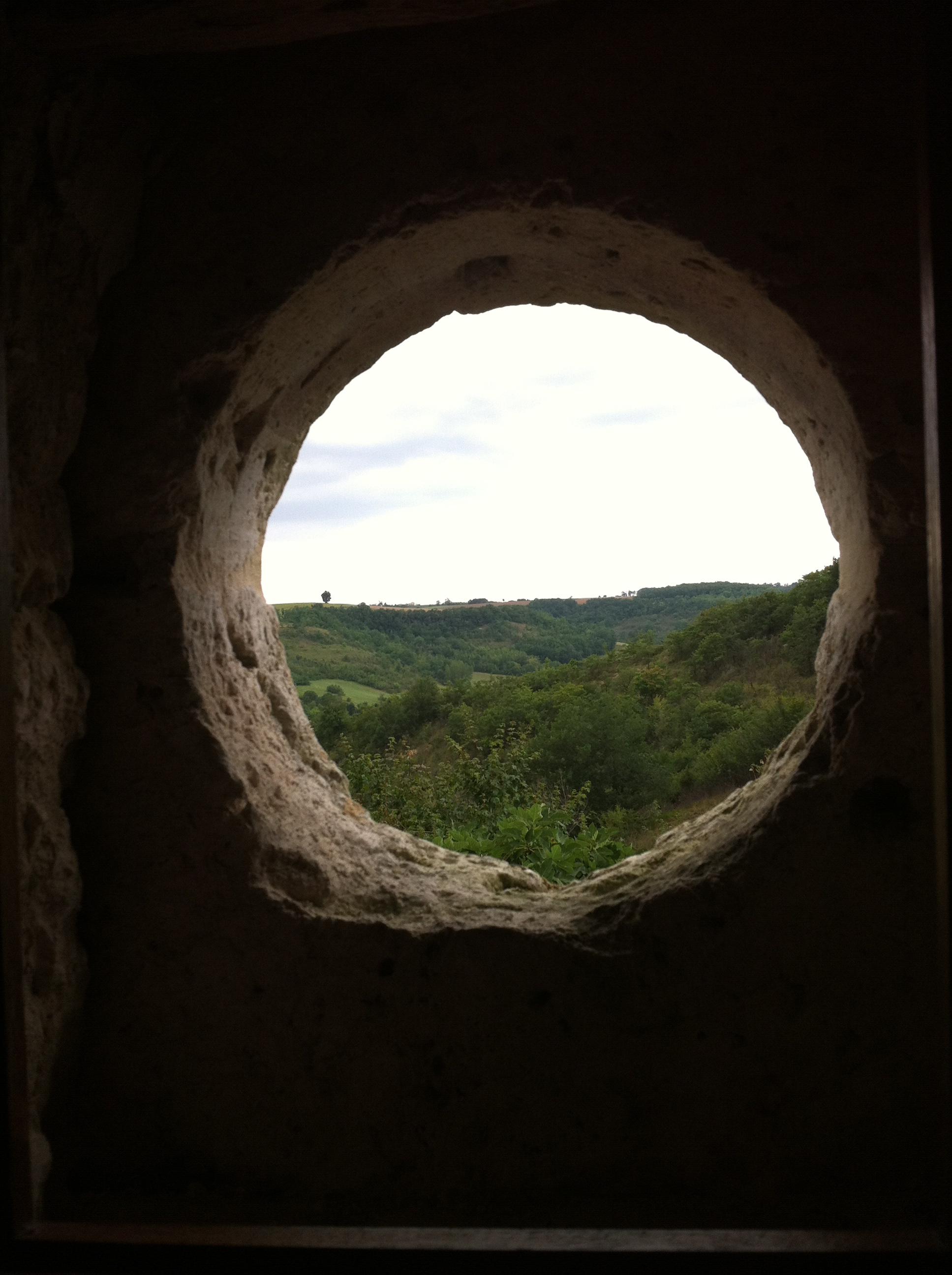
sturcisse window

New at this

One of the beautiful walks on Cape Ann is a short one, around a reservoir known as Goose Cove. Truth be told, I’ve never seen geese in the fresh water reservoir, only in the saltwater Cove itself. In the reservoir: ducks, yes, seagulls, yes, geese not yet. Having recently come home from a trip that included a visit to Plum Village in France, we practiced our mindful walking today around the water, in the leafy shade. One foot in front of the other, each step a step of peace, or so we hope. And we remembered the lovely serene face of Thich Nhat Hanh, as he taught in this year’s Summer Retreat, saying gently, with every step, “I have arrived” Step, “I am home.” Step, “in the here,” “in the now.”

“You have an appointment with life,” he said. Today.

http://plumvillage.org/mindfulness-practice/walking-meditation/